High Hedges in Fife: What to Plant, Where to Plant and How to Keep Them Under Control
A high hedge can completely transform a garden.
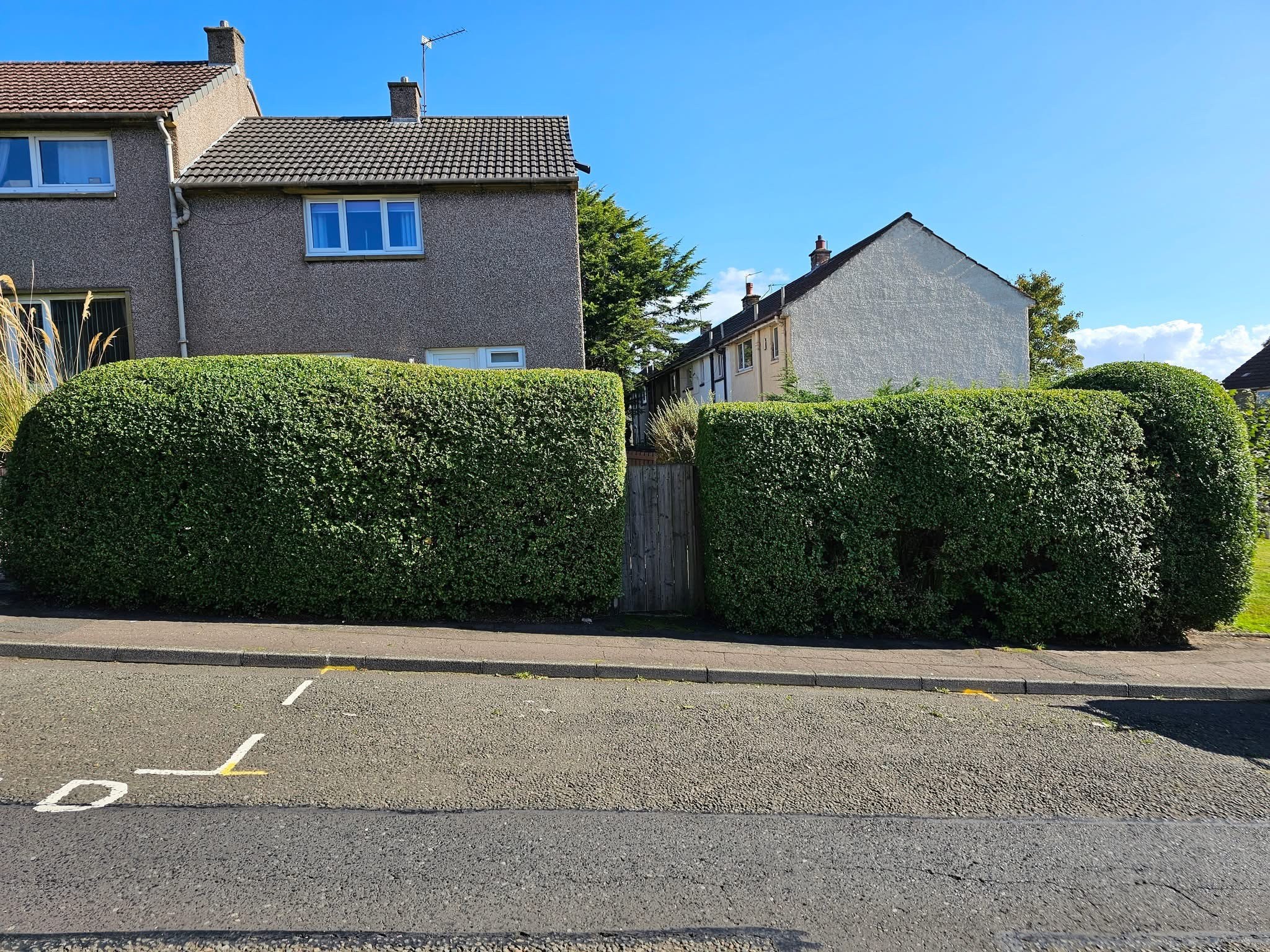
For homeowners in Kirkcaldy and across Fife, a well-positioned hedge can provide privacy, reduce exposure to wind, create a natural boundary and give a garden considerably more character than fencing alone.
But there is an important difference between growing a high hedge and simply allowing a hedge to grow high.
Choose the wrong species or plant it in the wrong position and what initially provides welcome privacy can eventually become difficult to maintain, overshadow a garden, interfere with neighbouring properties or simply become far larger than originally intended.
At Clyne Trees and Gardens, we work with trees, hedges and gardens throughout Kirkcaldy and Fife. If you are thinking about establishing a hedge that will eventually provide substantial screening, here are some of the things worth considering before you start planting.
Why Plant a High Hedge in Your Fife Garden?
Privacy is probably the most obvious reason, but it isn't the only benefit.
A substantial hedge can also act as a natural windbreak, which can be particularly valuable in exposed parts of Fife. It can create shelter for other garden plants, provide habitat for wildlife and help define different areas of a larger garden.
Unlike a fence, however, a hedge is continually growing.
That means the hedge you plant today needs to be chosen according to what you want it to look like in five, ten or even twenty years' time.
Which Types of High Hedge Are Suitable to Plant in Fife?
Fife experiences four distinct seasons, with cold and wet periods during winter, variable spring weather and periods of wind and exposure depending on the location.
The best hedge isn't therefore necessarily the species that grows fastest.
Beech
Beech can produce an attractive tall hedge and is particularly good where a more traditional appearance is wanted.
Although deciduous, established beech hedges often retain their copper-brown leaves through much of the winter, meaning they can continue providing a degree of screening after the growing season.
Beech generally performs best in reasonably well-drained ground and can make an excellent choice for many gardens around Fife.
Hornbeam
Hornbeam is worth considering where conditions are slightly more difficult.
It has similarities to beech but can cope with heavier soils and is generally tolerant of exposed conditions. For a Fife garden where drainage or soil conditions make beech less suitable, hornbeam may therefore be the better option.
Like beech, it can be maintained as a substantial formal hedge without necessarily becoming completely unmanageable.
Hawthorn
For a more natural or traditional Scottish garden boundary, hawthorn is difficult to overlook.
It is hardy, tolerant of exposed conditions and excellent for wildlife. Hawthorn can be incorporated into a mixed native hedge alongside species such as blackthorn, hazel and dog rose.
Rather than creating a perfectly uniform green wall, this produces a much more natural boundary that changes throughout the seasons.
Yew
For homeowners wanting dense evergreen screening, yew can make a superb long-term hedge.
Yew isn't the quickest hedge to establish, but that can actually be an advantage. It can eventually form a dense, substantial hedge while being much easier to manage over the long term than some extremely fast-growing conifers.
It tolerates pruning particularly well, although yew is poisonous if eaten, so its suitability should be considered where livestock or pets may have access.
Privet
Privet is another possibility for a relatively dense, traditional garden hedge.
Depending on conditions it can retain some of its foliage during winter and responds well to regular trimming. It is particularly suitable where homeowners want a neat, relatively formal boundary.
Leylandii
Leylandii can certainly provide a high hedge — and it can do so remarkably quickly.
That is also its biggest disadvantage.
If you need fast screening, Leylandii can appear to be the perfect solution. But a hedge planted for rapid privacy can become a major maintenance commitment several years later.
Regular trimming is essential. Once many conifers become badly overgrown, cutting deeply into old brown wood can leave areas that don't regenerate successfully.
Before planting Leylandii, therefore, think about whether you really need something that grows that quickly and whether you are prepared to maintain it year after year.
When Is the Best Time to Plant a New Hedge if You Live in Fife?
Autumn through to the end of winter is generally an excellent period for establishing many types of hedge.
Deciduous bare-root hedging such as beech, hawthorn and hornbeam can generally be planted from leaf fall during autumn through to late winter, providing the soil isn't frozen or waterlogged.
Evergreen and semi-evergreen hedging is particularly suited to early autumn planting.
This gives the plants an opportunity to begin establishing their roots while soil conditions remain workable, without facing the drying conditions that can accompany summer planting.
Container-grown hedging gives you more flexibility and can potentially be planted at other times of year, but planting during hot or dry weather creates considerably greater watering requirements.
Whatever the calendar says, ground conditions matter.
Trying to establish a new hedge in saturated Fife soil after prolonged rainfall isn't necessarily a good idea simply because it happens to be the recommended planting month.
What Is the Best Soil for Growing a High Hedge?
There isn't one perfect soil because different hedge species tolerate different conditions.
For most hedging, however, you are looking for soil that is:
- reasonably fertile;
- capable of retaining some moisture;
- well structured;
- free from severe compaction; and
- sufficiently well drained that the roots aren't sitting in water throughout winter.
Before planting, look at what is already growing successfully nearby. Existing trees, shrubs and hedges can provide useful clues about local soil conditions.
Heavy clay soil may need attention to drainage and structure, while very free-draining ground may benefit from organic matter to improve moisture retention.
Preparation shouldn't be limited to digging individual holes either.
A hedge is effectively a continuous line of trees or shrubs. Preparing a wider strip of ground gives the developing root systems much better conditions in which to establish.
Young hedges also need watering while their root systems develop. Don't assume that because Fife gets plenty of rain a newly planted hedge will always have sufficient moisture.
Before Planting, Look Up, Down and Around
One of the biggest mistakes when planting a hedge is concentrating entirely on how it looks on planting day.
A row of young plants might occupy very little space.
The mature hedge could be several metres tall and considerably wider.
Before planting, therefore, look at everything surrounding the proposed hedge.
Neighbouring properties
Could the eventual height substantially reduce daylight reaching your neighbour's garden or windows?
A little thought at planting stage can prevent a considerable amount of disagreement years later.
Pavements and roads
Don't plant so close to a pavement that the mature hedge will inevitably grow across it.
Remember that you will also need physical access to trim the outside face of the hedge.
Buildings, sheds and garages
Allow enough room between the hedge and buildings for future maintenance.
A narrow gap that seems perfectly adequate when the plants are 60cm tall may become almost inaccessible when the hedge is three metres high and considerably wider.
Overhead cables
Look upwards before planting.
A hedge intended to become several metres tall shouldn't be positioned without considering overhead telephone or electricity cables.
Underground services
Water pipes, drains and other underground services also need consideration.
Before extensive digging or planting is undertaken, make sure you understand what may be beneath the proposed hedge line.
Driveways and road visibility
A high hedge near an entrance can create a completely different problem.
Privacy shouldn't come at the expense of being able to see pedestrians, cyclists or approaching vehicles when leaving your driveway.
How High Can a Hedge Be in Scotland?
There is an important misconception that hedges in Scotland are simply prohibited from growing higher than two metres.
That isn't the case.
The High Hedges (Scotland) Act 2013 provides a mechanism for dealing with certain problem hedges. Broadly, a hedge may come within the legislation where it consists of a row of two or more trees or shrubs, exceeds two metres and forms a barrier to light.
That doesn't mean every hedge above two metres needs to be reduced.
A responsibly maintained three-metre hedge in the right location may cause no difficulty whatsoever. A badly positioned hedge of similar height could substantially affect a neighbouring property.
The lesson for anyone deliberately creating a high hedge is simple:
Think about its eventual impact before it reaches its eventual height.
Remember That Today's Privacy Hedge Is Tomorrow's Maintenance Job
Suppose you want a hedge approximately three metres high.
The question isn't simply:
"Which hedge will reach three metres fastest?"
A much better question is:
"Which hedge can I comfortably keep at approximately three metres for the next twenty years?"
That distinction can save a great deal of work and expense.
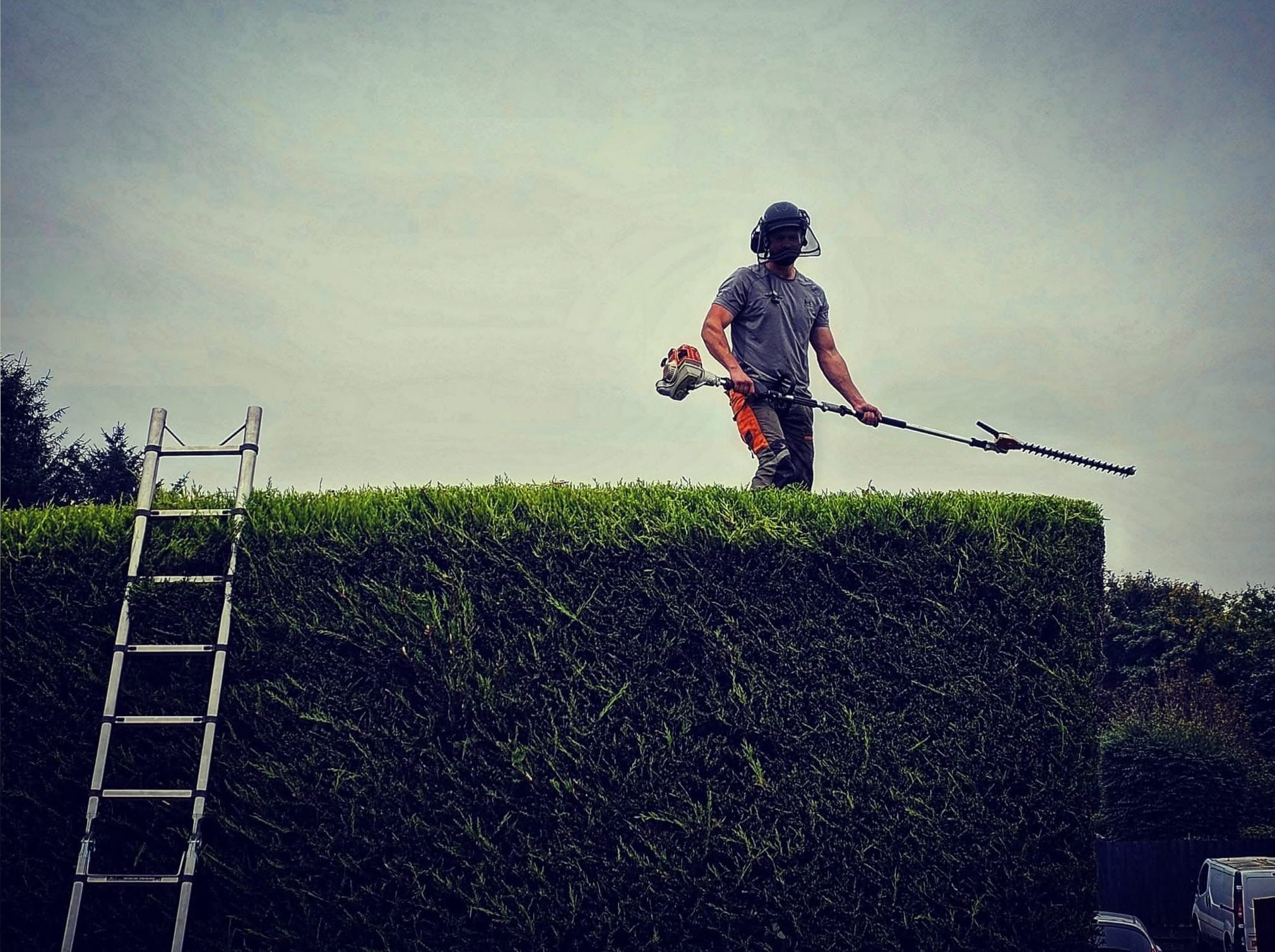
The taller and wider a hedge becomes, the more difficult it is to maintain safely. Eventually ladders, powered hedge cutters or professional equipment may be needed.
Regular maintenance is generally far easier than trying to recover a hedge that hasn't been touched for several years.
This is particularly important with many conifer hedges, which may not respond well to being severely cut back into old wood.
Don't Forget the Wildlife Living in Your Hedge
Established hedges can become extremely valuable wildlife habitats.
Birds may nest within dense hedging, while flowers, berries and insects associated with mixed hedges can provide food for many different species.
Before trimming any hedge, always check carefully for active birds' nests.
The main UK nesting period generally runs from March through August, although birds can nest outside these dates. Active nests are legally protected, so hedge cutting should be delayed where nesting birds are present.
High Hedge Already Out of Control?
Perhaps you aren't considering planting a hedge at all.
Perhaps the hedge was planted twenty years ago and is now the problem.
An established hedge that has become too tall, too wide or difficult to manage doesn't necessarily need to be removed.
Depending on the species, condition and previous maintenance, it may be possible to reduce its height, reshape it and establish a sensible future maintenance programme.
The species matters, however. Mature deciduous hedging and yew can often respond well to significant renovation, whereas severely cutting back an overgrown Leylandii or other conifer can leave permanent bare areas.
This is where professional assessment before cutting can be particularly worthwhile.
High Hedge Cutting and Garden Maintenance in Kirkcaldy and Fife
A well-planned high hedge can provide privacy, shelter, security and a fantastic natural backdrop to a garden for decades.
The key is choosing the right hedge, planting it in the right location and then keeping it under control.
At Clyne Trees and Gardens, we provide professional tree, hedge and garden maintenance services throughout Kirkcaldy and Fife.
Whether you are considering planting a new hedge, have an established hedge that needs trimming or are faced with a large overgrown hedge that has become difficult to manage, we can assess the situation and recommend a practical way forward.
Need help dealing with a high hedge in Fife? Contact Clyne Trees and Gardens to discuss hedge cutting, hedge reduction and ongoing garden maintenance in Kirkcaldy and the surrounding Fife area.